
-
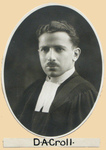
David A. Croll ’24 (1900–1991)
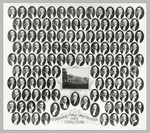
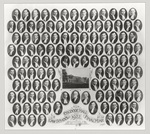
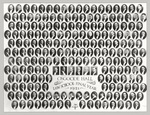
David Croll was born in Moscow and immigrated with his family to Canada when he was a young boy. An early advocate of welfare and other types of social assistance, Croll first worked as a lawyer then moved into politics. He served as the mayor of Windsor from 1931 to 1934 during the height of the Great Depression. Croll insisted the city go into deficit in order to provide relief programs for the unemployed and destitute. He became Canada’s first Jewish cabinet minister when he was appointed the Minister of Public Welfare under Mitchell Hepburn’s Liberal government. While serving as Minister of Labour, Croll resigned from Hepburn’s Cabinet, after the Premier sided with General Motors during the 1937 United Auto Workers Strike in Oshawa. He wrote: “I would rather walk with the workers than ride with General Motors.” After another term as mayor of Windsor, and service with the Canadian Army during WWII, he was elected as an MP for Toronto-Spadina riding. Croll became Canada’s first Jewish senator in 1955. He was the author of an influential report on poverty, which moved the Trudeau government to triple family allowances and institute the Child Tax Credit in 1978. Croll was also responsible for several Senate reports on aging. In 1990, he was sworn into the Queen's Privy Council, an honour usually given only to federal cabinet ministers.
-
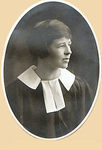
Vera Parsons ’24 (1889-1973)
Vera Parsons was the first female criminal defence lawyer in Ontario, likely the first woman to appear before judge and jury, and the first to defend an accused murderer. A great fan of litigation work, especially at the appellate level, Parsons practised criminal law at a time when it was seen as particularly unsuitable to women. Parsons, the daughter of a Simpson’s department store executive, was a highly educated woman, holding a Bachelor of Arts degree from the University of Toronto and a Master’s degree in Comparative Languages from Bryn Mawr College. In 1924, she graduated from Osgoode and became the first woman whose academic accomplishments earned her the Osgoode Silver Medal. Parsons was also one of the first female lawyers in Canada with a disability, requiring a cane after having contracted polio as a child. In 1944, she became only the third woman to be named King’s Counsel.
-
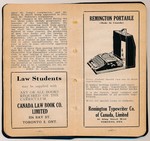
1923 - A New Era
John Delatre Falconbridge (1875-1968) is appointed the Dean of Osgoode Hall Law School. Falconbridge would serve as Dean for twenty-five years, and is second only to Newman Wright Hoyles, who served for twenty-nine years. This is the 1926-1927 Osgoode Hall Student Directory and Handbook. The names, phone numbers (only four digits long), addresses, and articling firms of students were listed in the back.
-

Helen A. Kinnear ’20 (1894-1970)
Described as generous and self-effacing, Port Colborne native Helen Kinnear was the first federally appointed woman judge in Canada. Before attending Osgoode Hall Law School, she received a BA from the University of Toronto in English and History. She set up practice with her father and participated in numerous Liberal political associations. She was even nominated to run as a federal candidate but declined. Kinnear was the first woman to plead a case in the Supreme Court of Ontario, the first woman to be appointed a King’s Counsel in the British Commonwealth (1934), until finally she became the county court judge for Haldimand. She also served on the Council of the Canadian Bar Association, was the honorary president of the Women’s Law Association of Ontario, and was appointed by the Province of Ontario as a member of the Minister’s Advisory Council on the Treatment of the Offender. In 1965, she became the first woman to receive a medal from the John Howard Society of Ontario in recognition of her contributions to the profession and concern for the rights of the offender.
A collection of all images available on Osgoode Digital Commons.
Printing is not supported at the primary Gallery Thumbnail page. Please first navigate to a specific Image before printing.